
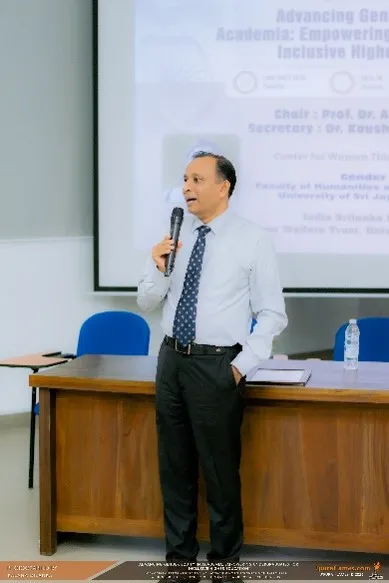
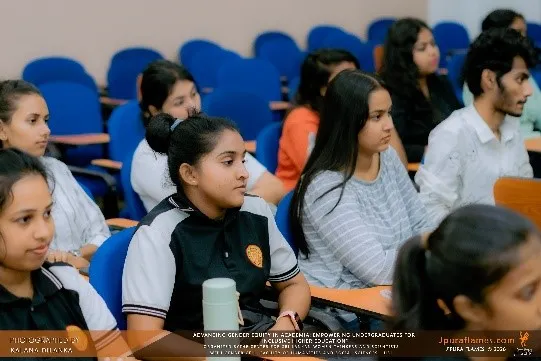
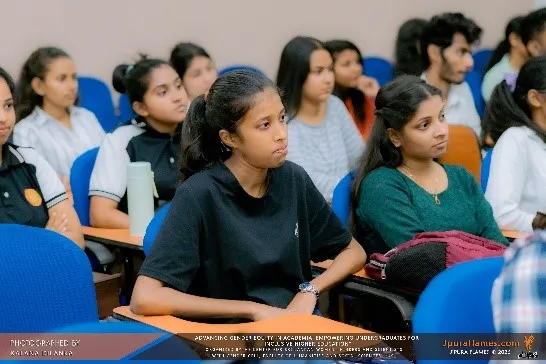
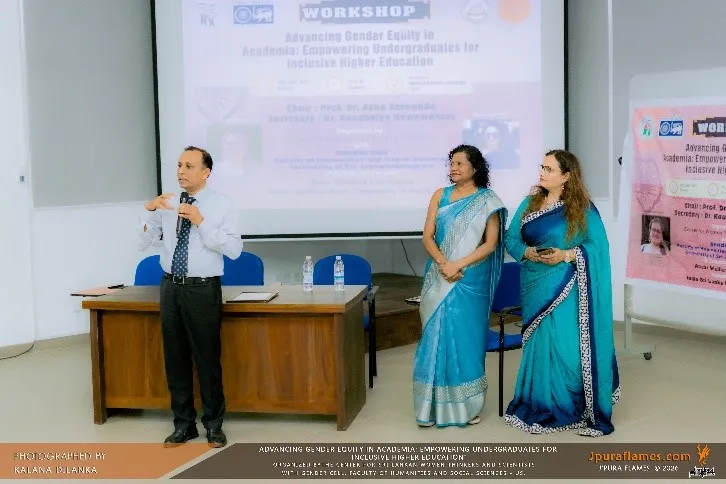
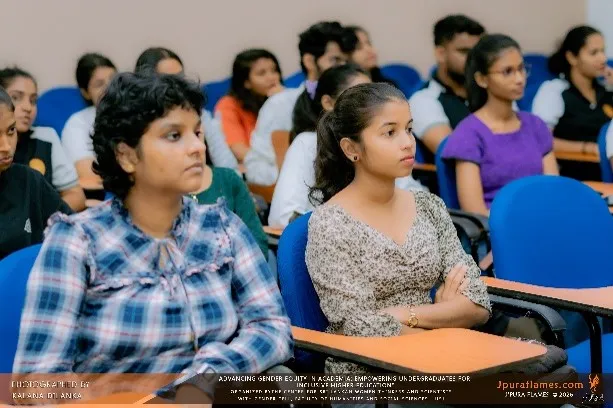
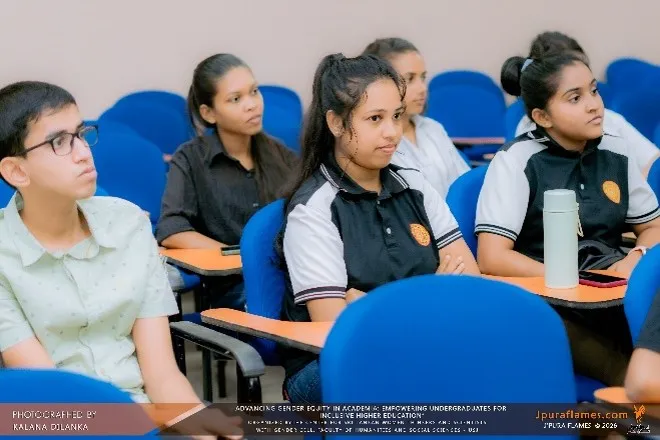
On July 15, 2026, the Center for Sri Lankan Women Thinkers & Scientists, in collaboration with the Gender Cell of the Faculty of Humanities and Social Sciences, hosted a transformative one-day workshop titled “Advancing Gender Equity in Academia: Empowering Undergraduates for Inclusive Higher Education.” The event brought together 40 undergraduates and distinguished academics from Sri Lanka and India, in partnership with the Ansar Welfare Trust and the University of Delhi.
Inaugural Session
The workshop commenced with a welcome address by Prof. Dr. Asha Fernando, who emphasized gender equity as a fundamental human rights issue. Prof. Shirantha Heenkenda, Dean of the Faculty of Humanities and Social Sciences, formally inaugurated the event, commending the organizers and reaffirming the university’s commitment to creating an inclusive environment. Dr. Kaushalya Hewawasam introduced the program theme, highlighting the role of universities as beacons of safety and inclusivity.
Technical Sessions
Prof. Rasanjale Perera presented on gender issues in Sri Lanka, detailing the “Sri Lankan Paradox” was high female literacy and health indicators alongside low labor force participation (31-33%), minimal political representation (below 10%), and persistent societal discrimination. Her concluding remark, “Progress – yes. Equity – no,” captured the central challenge.
Dr. Asma Arshi from the University of Delhi brought an Indian perspective, emphasizing the transformative power of education, recognition of unpaid care work, and the need for cross-border collaboration. She stressed that the movement for gender equity is not anti-men but a struggle to remove barriers and establish justice.
Prof. Dr. Asha Fernando explored the psychological basis of gender, explaining how stereotypes impact mental health, leading to anxiety and depression. She highlighted that support systems act as vital buffers against negative outcomes.
Dr. Kaushalya Hewawasam presented a stark analysis of Gender-Based Violence (GBV) on campuses, attributing it to unequal power dynamics, harmful norms, and weak reporting mechanisms. She called for clear policies, confidential support services, and active student engagement.
Panel Discussion and Recommendations
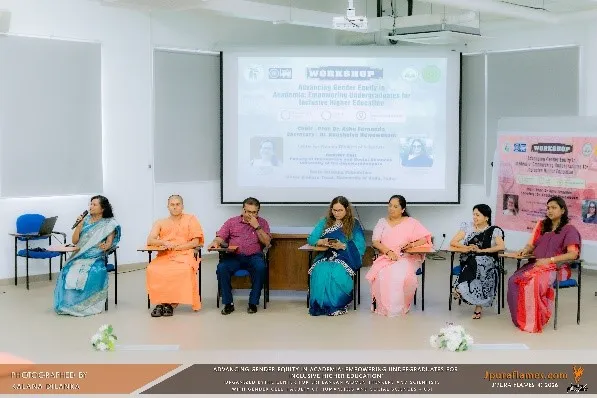
The programme concluded with an engaging panel discussion featuring Dr. Ven. Nelliwala Meththananda, Prof. Asha Fernando, Prof. Rasanjali Perera, Prof. Shantha Gamlath, Dr. Ashma Asiri, Prof. Sanjeewee Manthirathna, and Dr. Kaushalya Hewawasam. The panel reflected on the key insights shared throughout the workshop and discussed practical strategies for promoting gender equity and women’s empowerment within higher education.
The discussion highlighted that achieving gender equity is a shared responsibility requiring the collective commitment of universities, policymakers, academic staff, students, and communities. The panel acknowledged that while considerable progress has been made, persistent social, cultural, and institutional barriers continue to hinder equal opportunities for women.
Closing Ceremony
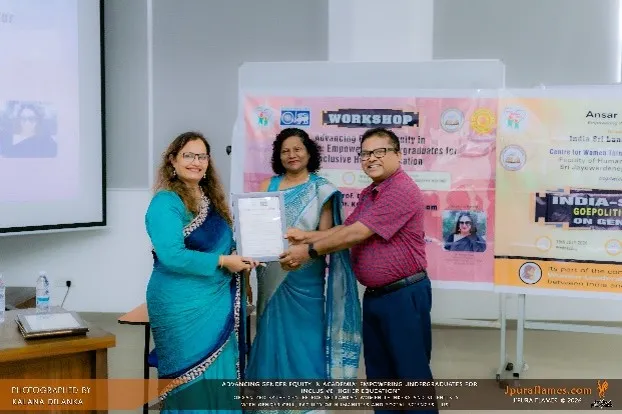
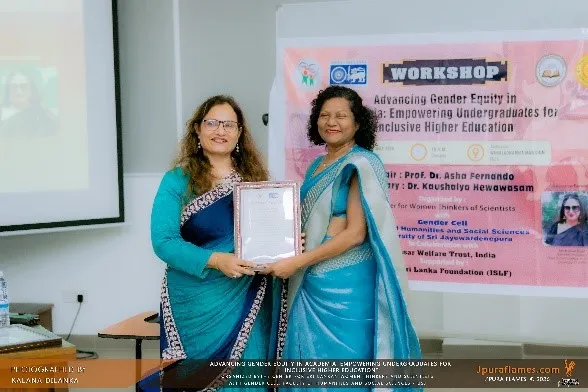
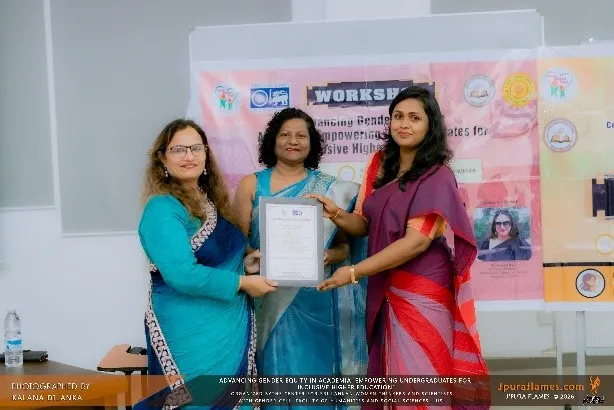
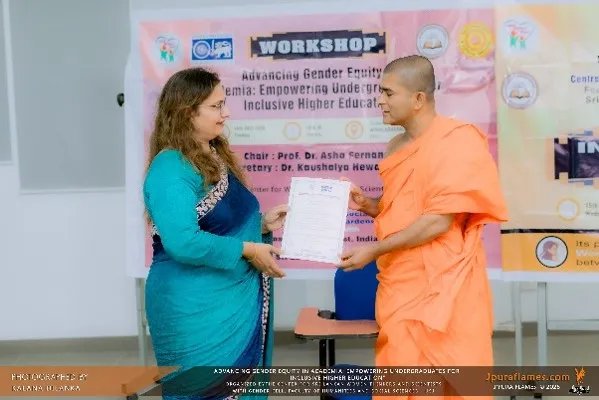
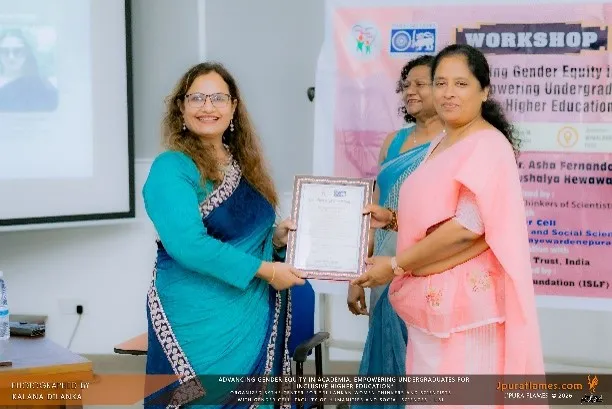
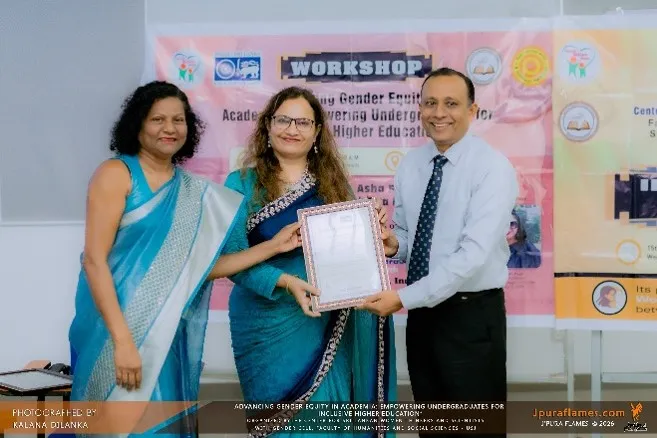
Certificates were distributed to all 40 participants. Malshi Sadunika delivered the Vote of Thanks, and Prof. Dr. Asha Fernando concluded by urging students to become “ambassadors of change.”
Key Takeaways
- Gender is a psycho-sociological construct, not a biological absolute
- GBV is systemic, not isolated incidents
- Stereotypes profoundly impact mental health
- Education and law are powerful tools for empowerment
- Every individual has a responsibility to challenge inequality
Way Forward
The Gender Cell plans to organize a follow-up workshop for male students, establish an online discussion forum with Indian partners, and develop a campus climate survey to inform policy changes. This workshop marks a significant step toward transforming universities into active agents of social transformation.
The Center for Sri Lankan Women Thinkers & Scientists extends its sincere gratitude to all resource persons, participants, and collaborating institutions for making this workshop a meaningful step toward a more inclusive and equitable academic environment.
No responses yet